Example Legacy Modernization Strategy
A Phased Approach to Sustainable Transformation
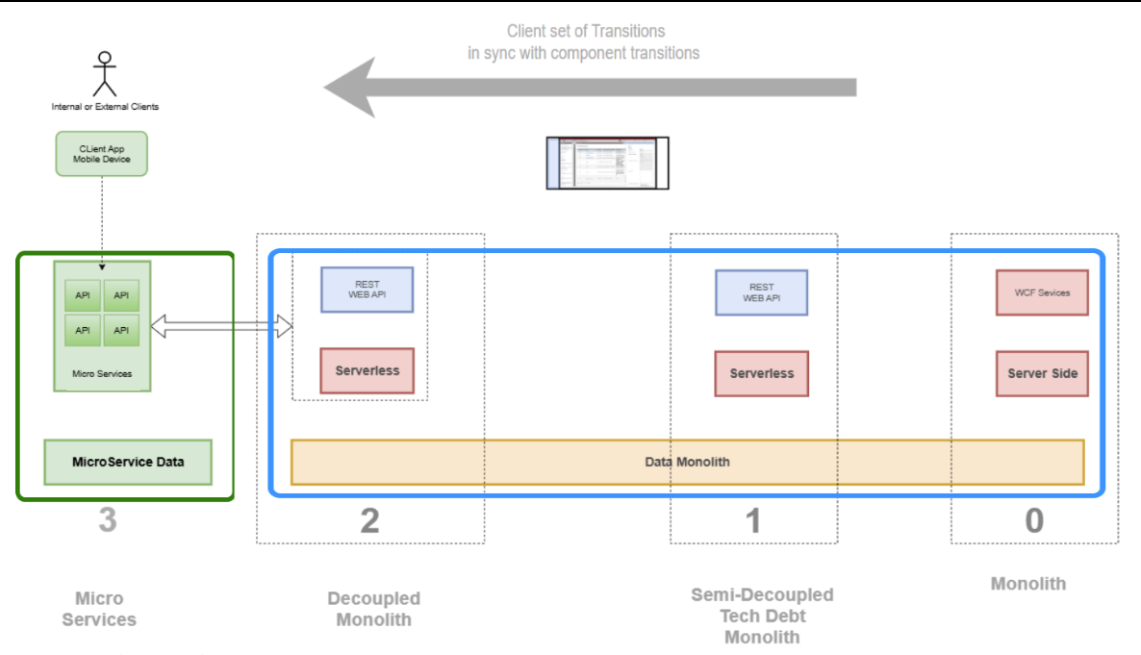
Requirement. System is fully functional at each stage. Phase 2 is also tech debt free. Entering Phase 3 is a long term strategy move.
Core Principles
| Principle | Description |
|---|---|
| Feasibility First | Ensure each step is achievable, testable, and delivers measurable business value |
| Business-Technology Alignment | Architecture decisions must directly support business objectives |
| Four-Stage Architecture Development | Progress methodically through conceptual, logical, physical, and implementation stages |
Phase 1: Assessment and Strategic Planning (Conceptual Architecture Stage)
Origins of CVP (Capital Value Process). Strategic planning framework CVP, is used in many large organizations, helping to govern high stakes and high investments.
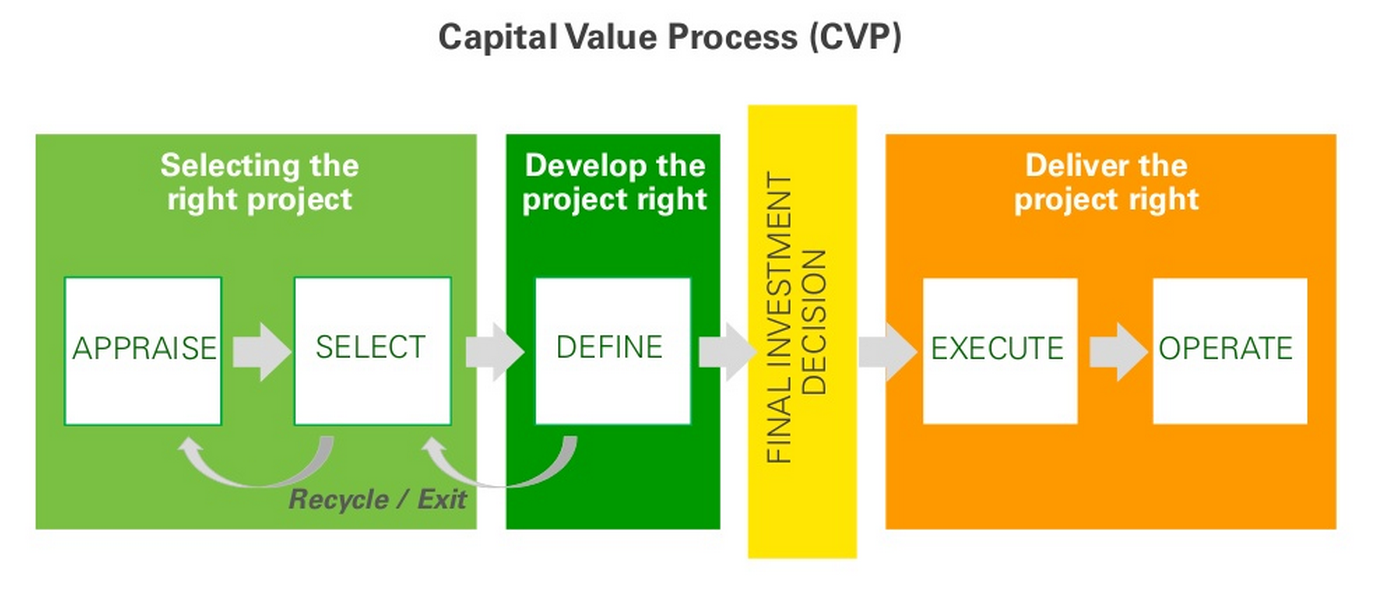
CVP was used in this instance.
| Component | Details |
|---|---|
| Key Activities | • Conduct system inventory and dependency mapping • Perform business process analysis • Establish modernization goals with clear, measurable KPIs • Engage stakeholders to understand priorities • Classify system components by criticality, debt, and complexity |
| Deliverables | • Business capability map aligned with technology components • High-level modernization roadmap • Conceptual architecture diagram • Risk assessment and mitigation strategies |
Phase 2: Incremental Modernization Approach (Logical Architecture Stage)
| Component | Details |
|---|---|
| Proposed Strategy | Strangler Fig Pattern: 1. API Layer Development 2. Domain Identification 3. Parallel Systems 4. Feature Parity Testing |
| Enabling Patterns | • Service Mesh: Manage communication between components • Feature Toggles: Control feature migration and risk • Blue/Green Deployments: Minimize transition downtime |
Phase 3: Technical Modernization Execution (Physical Architecture Stage)
| Modernization Track | Key Elements |
|---|---|
| Infrastructure Modernization | • Containerization of appropriate components • Adoption of infrastructure-as-code practices • Implementation of CI/CD pipelines • Cloud migration strategy (likely hybrid initially) |
| Application Modernization | • Domain-driven modules for high-value functions: distributed monolith, modules communicate only through their API, each module maps to a container • Data access layer modernization • User interface modernization (potentially via micro-frontends) |
| Data Modernization | • Implementation of data virtualization layer • Gradual schema evolution • Development of canonical data models • ETL/ELT processes for data migration |
| Technology Stack Considerations | • Selection based on fit-for-purpose, not trends • Evaluation of enterprise support availability • Assessment of internal skill sets • Consideration of long-term viability |
Phase 4: Implementation and Operational Excellence (Implementation Architecture Stage)
| Implementation Strategy | Key Elements |
|---|---|
| Minimum Viable Products (MVPs) | • Start with smaller, less critical domains • Iterate based on stakeholder feedback • Establish success metrics for each MVP |
| Operational Continuity | • Implement comprehensive monitoring • Deploy canary releases to minimize disruption • Maintain dual operations capability • Establish rollback procedures |
| Knowledge Transfer and Training | • Develop training programs for new technologies • Document architectural decisions and patterns • Implement paired programming |
Business Continuity Measures
| Area | Approach |
|---|---|
| Change Management | • Stakeholder communication plan with regular updates • User training programs ahead of each release • Careful management of business expectations |
| Risk Mitigation | • Extended support for critical legacy components • Regression testing for parallel systems • Performance testing comparing legacy vs. modern • Phased cutover plans with defined success criteria |
| Operational Safeguards | • Enhanced monitoring during transitions • Temporary increase in support staff during cutovers • Pre-scheduled maintenance windows for major transitions |
Conclusion
This strategy emphasizes feasibility through incremental, value-driven changes that align with business objectives. By methodically progressing through the four architectural stages, each modernization step is carefully planned, executed, and validated—balancing innovation with pragmatism while transforming technology, processes, and capabilities.